Who are our peer reviewers?
Our latest insights into who our peer reviewers at Taylor & Francis are, and their motivations
In 2023, peer reviewers for over a thousand Taylor & Francis journals were asked about themselves and their experience as a peer reviewer. With this information we hope to provide our Editors with insights into the broad peer reviewer community, as we understand how difficult it is to connect the right researcher, with the right paper, at the right time.
So, who are the peer reviewers across Taylor & Francis journals, and what motivates them to participate?
Before we take a look at the data, it is important to note that the data is influenced by who was invited to peer review in the first place. Many Editors seek to invite not only those with expertise, but also those who might have time and motivation to review. This is reflected in the results below.
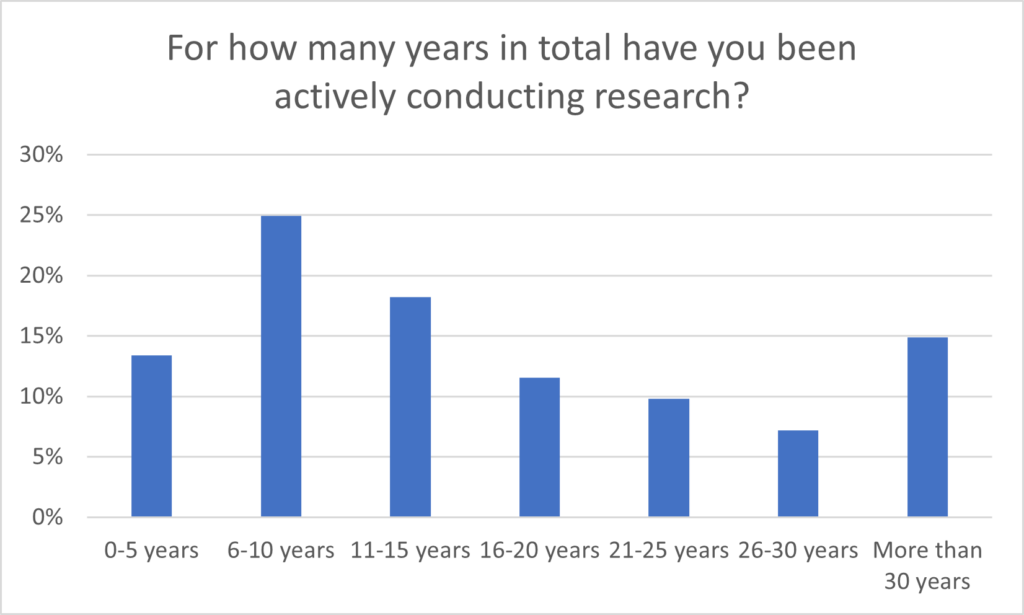
How long have peer reviewers been conducting research?
People review for Taylor & Francis journals at all stages of their careers.
But, unsurprisingly, people in the postdoctoral phase are overrepresented as they seek to build their career and academic reputation.
Those who have been actively conducting research for more than 30 years are also frequent reviewers for Taylor & Francis journals. This group of people also includes academics who never fully retired after their active research was over, and who continue to support their research communities.
Where are peer reviewers located?
People who review for Taylor & Francis journals are located all over the world.
Majority of respondents are in Europe.
15% of peer reviewers are in the USA.
11% of peer reviewers are in India.
6% of peer reviewers are in China.
5% of peer reviewers are in the UK.

How frequently do peer reviewers review journal articles?
We asked reviewers (approximately) how often they review journal articles in general – not for a specific journal.
More than half of the respondents review an article every couple of months or less frequently. Around 4% of respondents carry out peer review more than once a week. Often these reviewers are editorial board members, or otherwise have an agreement with a specific journal.

We also asked peer reviewers about what motivates them to review an article, and what rewards would help them feel most valued as a reviewer.
What motivates reviewers to review an article for a journal?
Our data suggests that reviewers agree to review primarily because they are interested in the topic of the article, and because they want to support their community and the journal.
This finding aligns with the free-text comments we received as part of the survey. These comments often mention their respect for a specific Editor.

What rewards would help peer reviewers feel most valued?
Following on from asking reviewers what motivates them to review, we asked what rewards would help them feel most valued as a reviewer.
Looking at the data, we can see that most reviewers want to be able to showcase their activity by the inclusion of their name in a published list thanking all reviewers for the journal (not revealing which articles were reviewed), or other public recognition for their review.
Also, reviewers appreciate receiving feedback from the Editor, which ties in with the community aspects of peer review. It also suggests that many peer reviewers would like to learn and improve from the experience.
Unsurprisingly, monetary rewards and discounts are also welcome. This is an area where Taylor & Francis, like other publishers, continue to analyze and improve the offering.
